sustainability
Multibody Superyachts
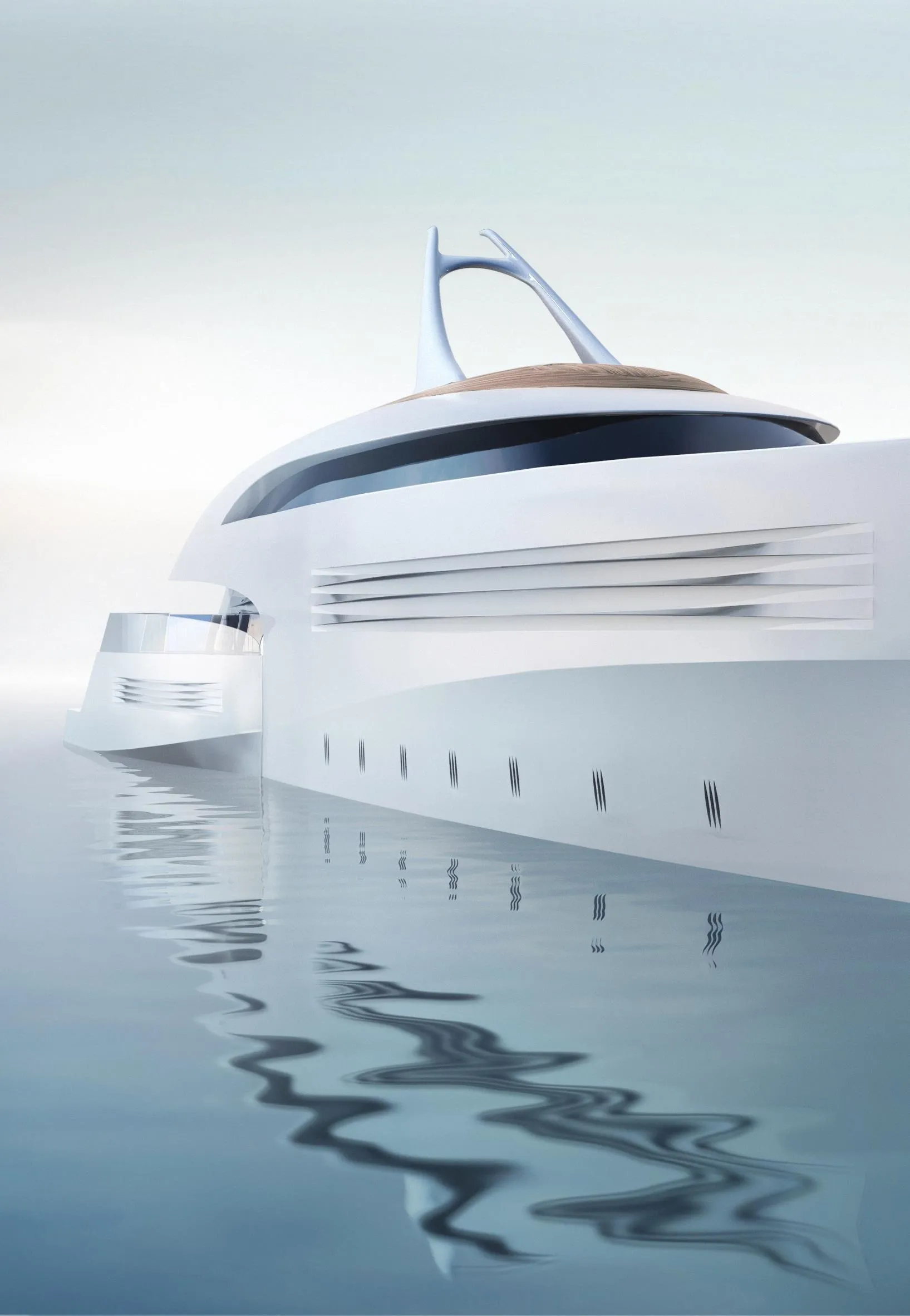
Two important trends can be witnessed in the world of superyachts. First, the luxury landscape is shifting from collecting tangible assets to pursuing exclusive tailor-made experiences. The second trend is the electrification and the use of batteries on superyachts. Due to the increase of emission restrictions, there is more interest towards battery-powered yachts.
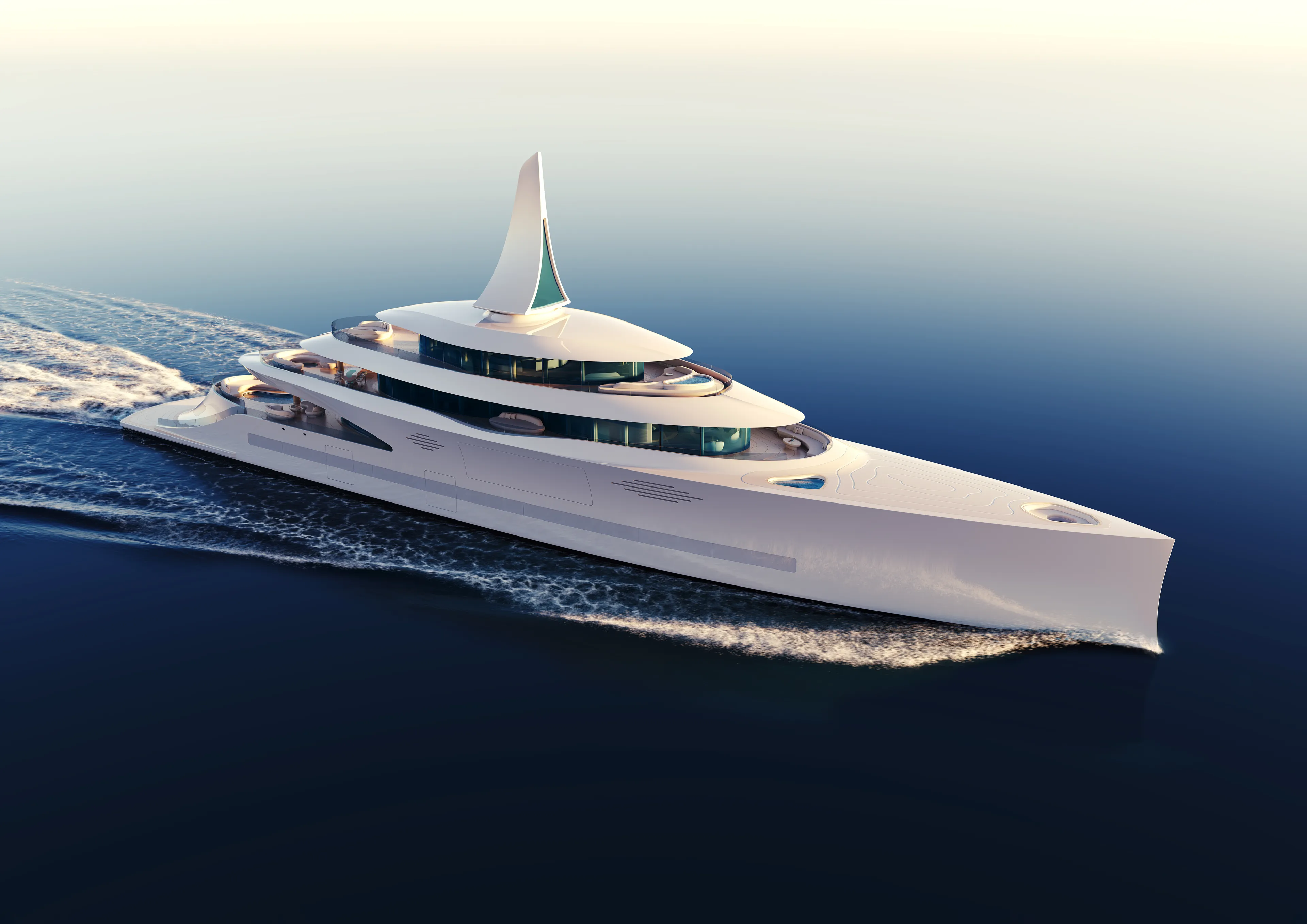
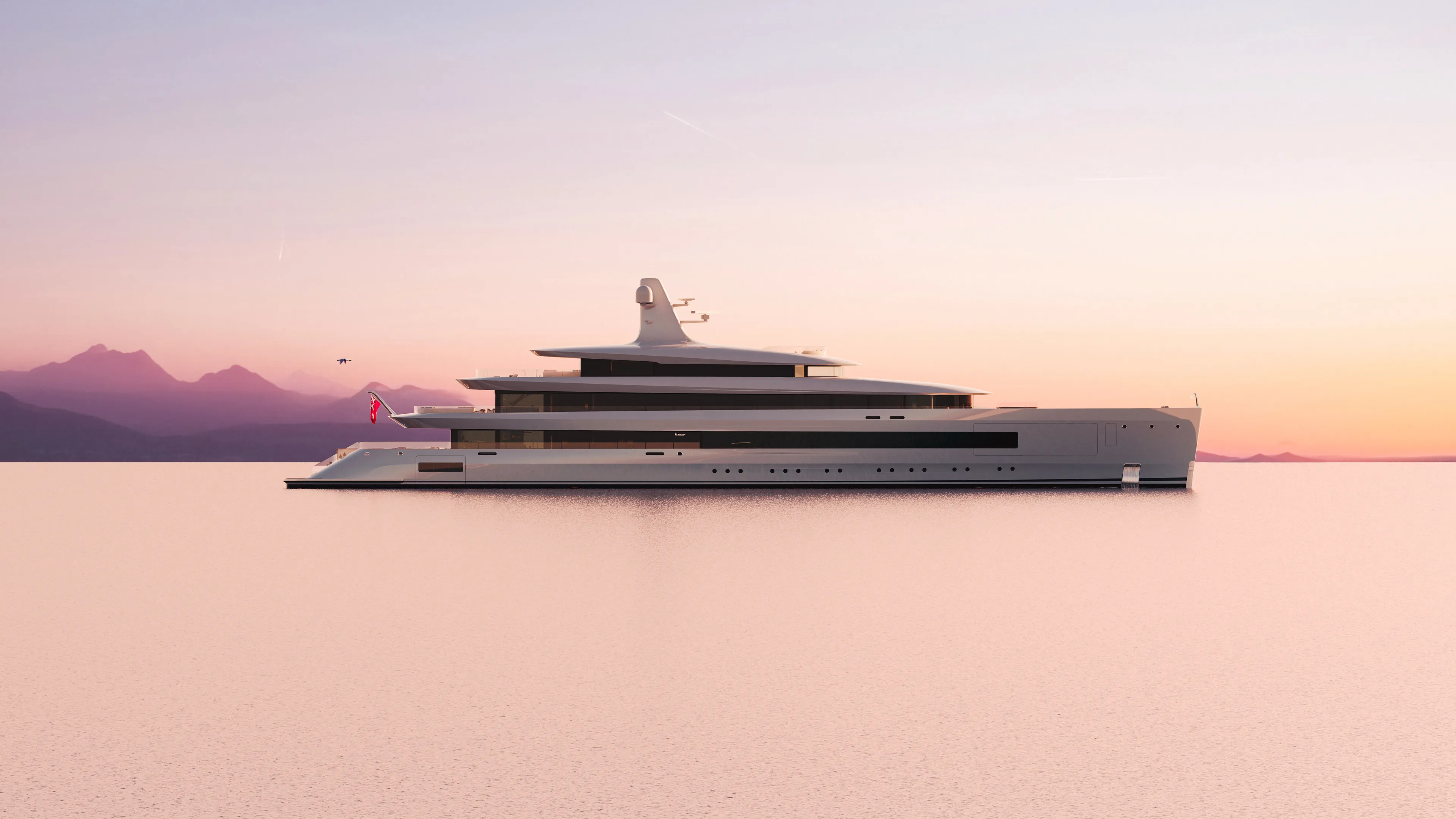
During the Monaco Yacht Show in 2016, Feadship presented their answer to these trends: a unique multibody superyacht concept named Choice. A multibody superyacht is a combination of multiple yachts, including at least one superyacht, and designed around positive involving interaction. In the case of Choice, this interaction enables a combination of three bodies, of which one solely propulsed by batteries, to sail long distances. By means of interaction, the weight of the batteries are kept within reasonable amounts. Besides the previous features, the multibody creates significant more flexibility and possibilities for its use. On the contrary, sailing with three interacting bodies instead of a conventional yacht could use more energy.
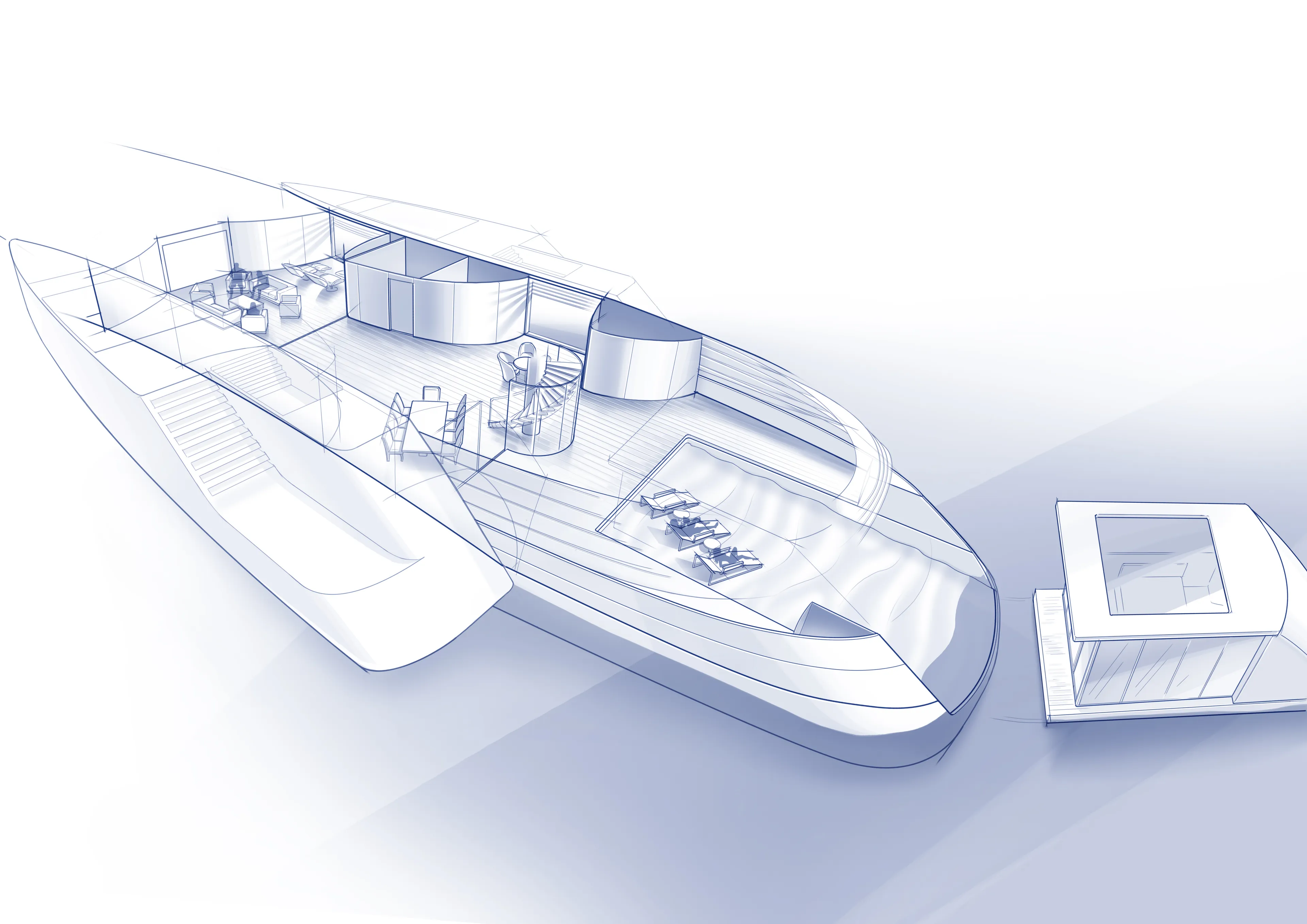
At the moment of writing this article, there is no such multibody concept sailing the seas. Therefore this article analyses a range of multibody superyacht concepts by comparison of total energy consumption. To gain more understanding of the multibody superyacht usage, a fictive itinerary is designed. This also functions as a business case for the concept design boundaries and the energy consumption comparison.
Different multibody superyacht concepts are created within the boundaries of the design space. By splitting the design space into two parts, i.e. the multibody design space and single body design space, the process is kept comprehensible. All concepts have an equal overall functionality, measured by the available luxury area. The difference between the concepts is found in the way of distributing the area over the three bodies within each multibody concept. The battery propulsion could be fitted in either, or multiple, of the three bodies. Different possibilities concerning the location of the batteries are assessed too.
When designing the single bodies within the multibody concepts, a challenge arises. Due to the weight of the required batteries, the single bodies within the multibody are heavier than their conventional fuel powered counterparts. To compensate for this weight, the bodies size is increased, while maintaining the predefined functionality. Due to the size increase, more engine power is required. Consequently, the battery capacity should increase, resulting in more weight. This article proposes a design tool for the single body to solve this iterative process. If the designer provides information on the functionality and usage of a yacht, the design tool calculates the main dimensions of a single body concept. The functionality of a single body is predefined by six yacht types and functions as design tool input. Other input is derived from the business case. Through this input, the design tool generates single body solutions.
By combining the solutions of the multibody design space and single body design space, three multibody concepts are established. To compare the multibody superyacht concepts with the conventional way of yachting, a benchmark concept is created. The benchmark concept consists of two fuel powered bodies, with an equal amount of luxury area as the multibody concepts. These four concepts are then compared to each other on total energy consumption in the fictive itinerary. The comparison is based on equal activity time for the guests throughout all concepts.
All three multibody concept designs have a lower total energy consumption than the conventional benchmark. One of the multibody concepts saves up to 33.2% of energy compared to the benchmark. This reduction is mainly due to slow steaming of the largest body within the multibody. Note that the energy consumption reduction does not jeopardise the amount of activity time for the guests.
Latest