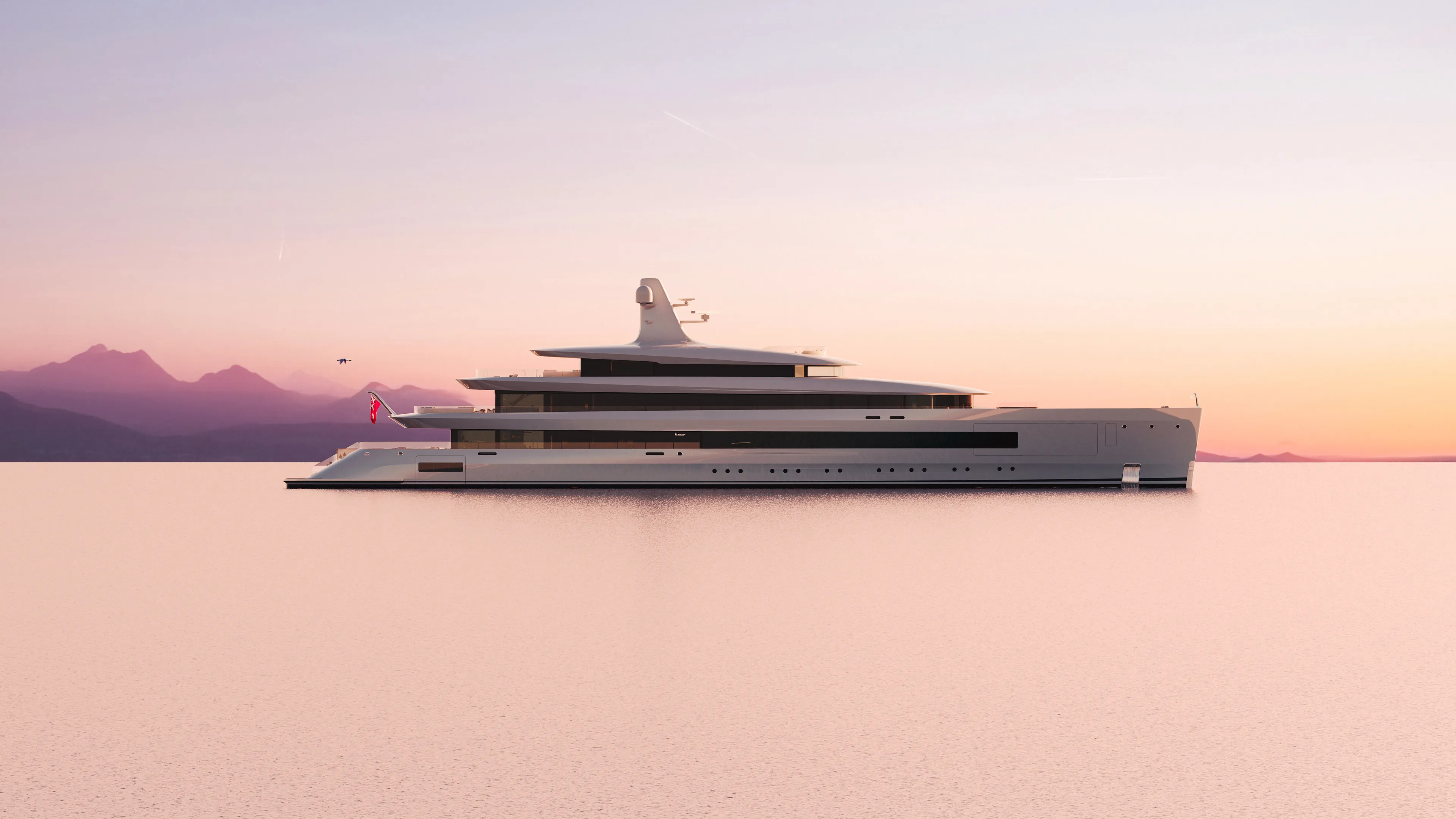
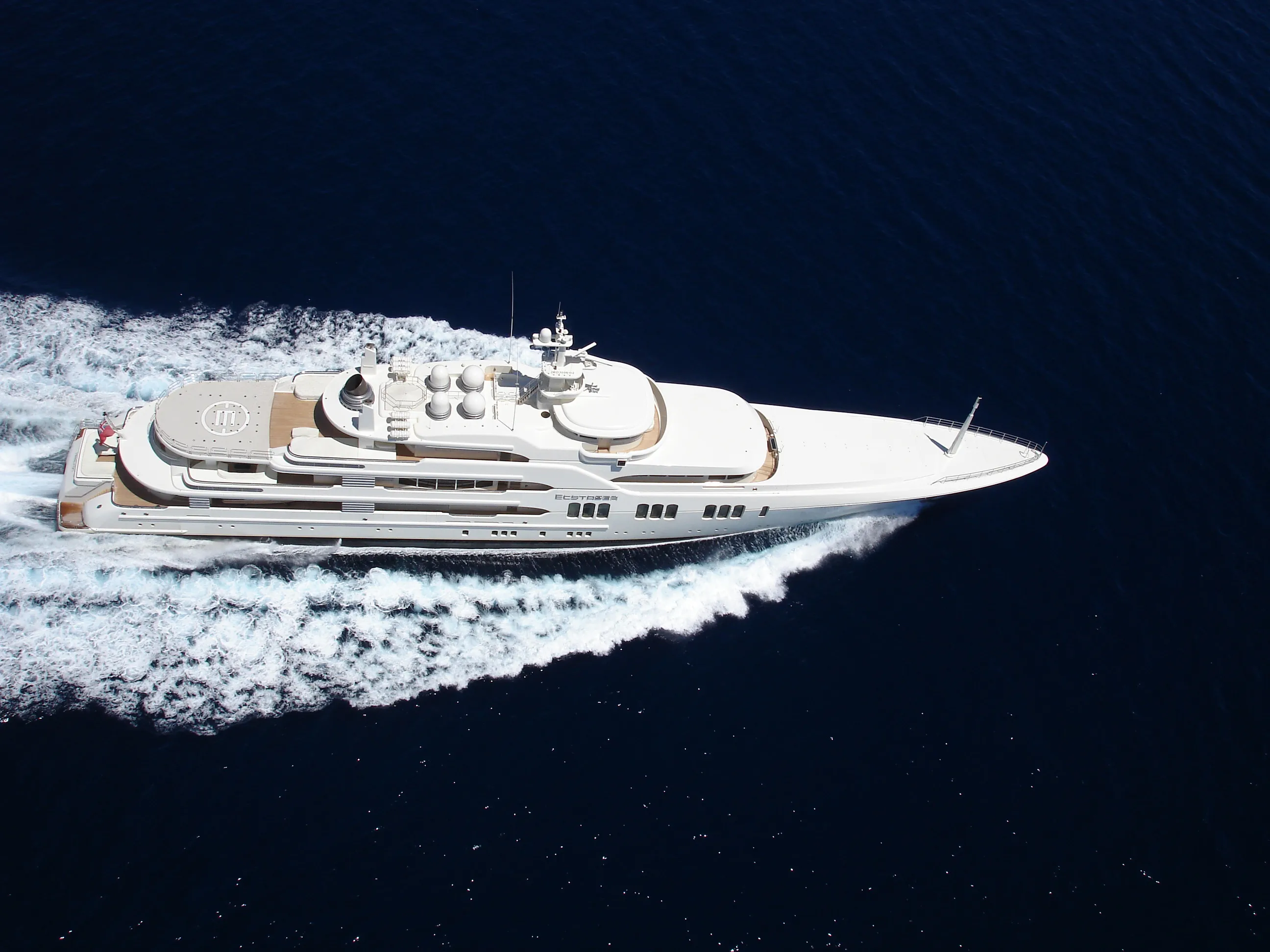
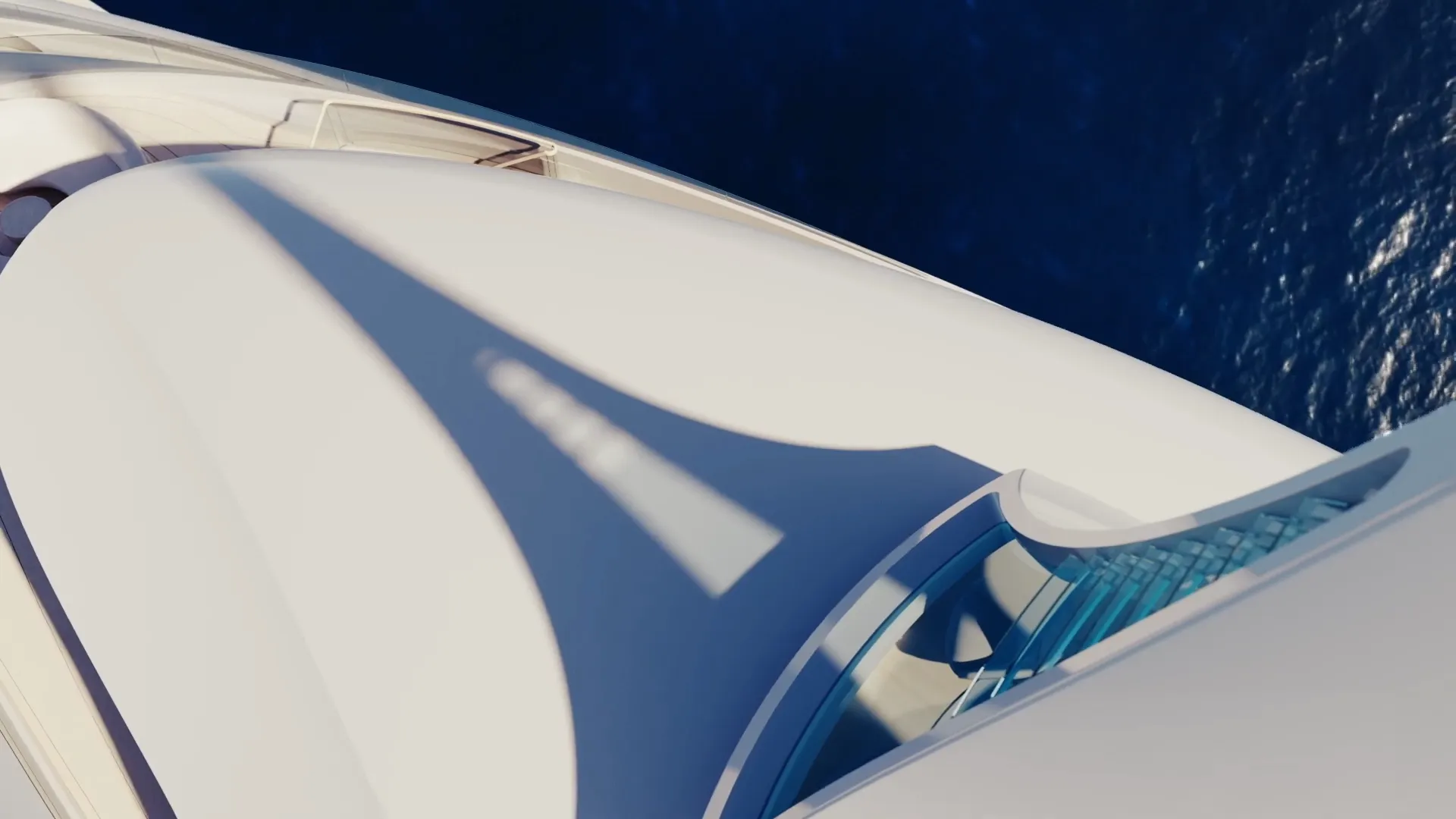
The Plug-in Hybrid electric superyacht
The yachting industry is committed to contribute its part to reduce environmentally harmful greenhouse gas emissions. This rapid shift in the industry is induced by regulations, but also by the pursuit of social acceptance of the industry. However, combining sustainability with pure luxury turns out to be challenging. An all-electric yacht has been deemed feasible but too limited in operation, however, the increased use of emerging battery technologies in a yacht is an opportunity.
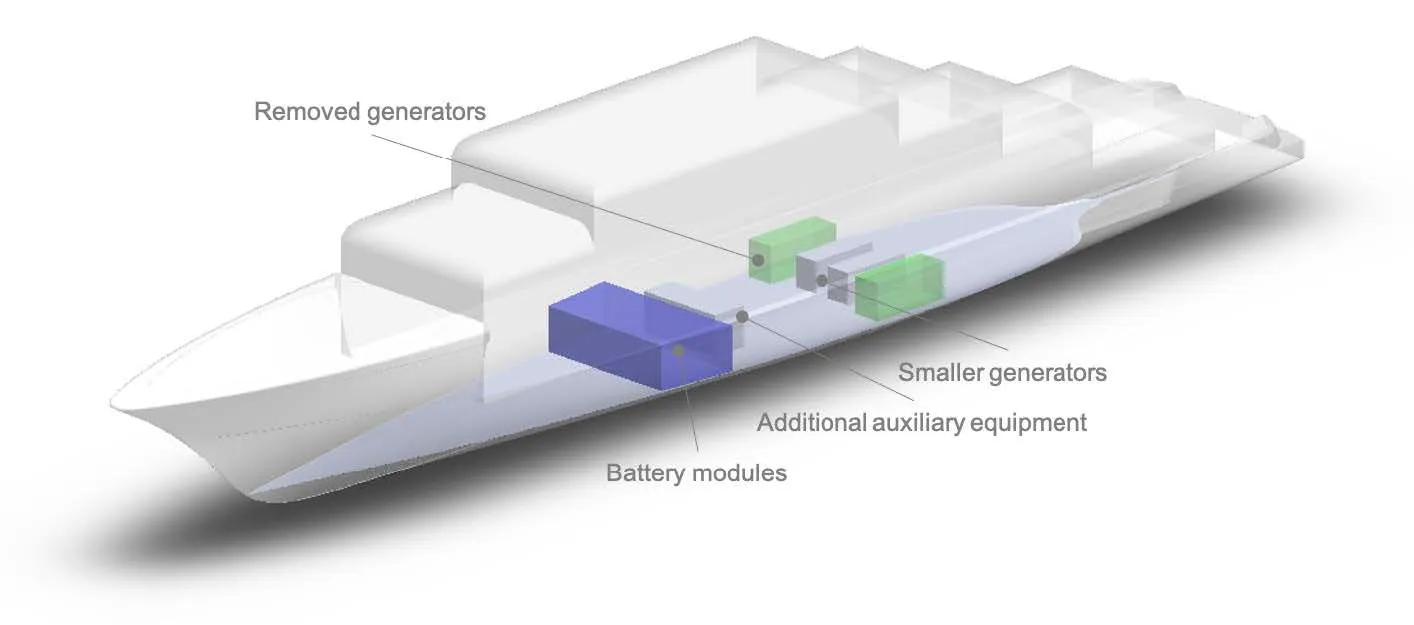
The solution proposed in this study is the plugin hybrid electric concept. This propulsion system, compared to a conventional diesel-electric propulsion system, uses an enlarged battery system capable of being plugged into the local power grid in parallel with generators that are decreased in size. The intrinsic philosophy of the concept is that the batteries can be recharged via shore power in marinas, providing a more sustainable source of energy.
In this study, three different yacht sizes are investigated, each with three different all-electric autonomy versions. Two analyses are performed to gain insight into the feasibility of the concept. A statistical operational voyage data analysis is performed to obtain a design speed and all-electric autonomy for the concept. The statistics indicated that the concept only had to be designed for a single design speed, based on a Froude to waterline length relation. The all-electric autonomy for the concept needs to be designed to be in the range of 2 to 3% of the full range capability to have a significant impact. In addition, a questionnaire was sent to marinas worldwide to obtain the actual shore power values available. By subtracting the hotel load from these available shore power values, the available charging powers are obtained. Since shore power varies in different regions of the world and hotel loads vary by yacht size, there is a wide variation in expected feasibility.
Regression analyses are performed to obtain the different design parameters for the equipment of this concept. Therefore, datasets of lithium-ion batteries and high-speed diesel generator sets are examined. Additionally, design parameters of the concept specific required auxiliary equipment are determined. In the design phase, the total available compensation weight is first determined. Therefore, three methods of weight compensation are introduced based on decreasing the size of the generators, optimising tank usage, and adding displacement. This results in a maximum weight that can be added by the concept that fits within the margins of the early stage design. Of this added weight, the three different all-electric autonomy versions of the concept all take up a different share (0.0%/2.5%/5.0%).
The generators are scaled to a single required design cruise speed, which is derived from the statistical analysis. Using the regression design parameters, parametric designs are created in accordance with the set weight limit per version. Design characteristics such as mass, volume, installed generator power, installed battery capacity, and resulting autonomy are determined. The resulting autonomies all fit the design range of the statistical analysis. The generated effects of these concept versions are determined via a comparison with a diesel-electric benchmark on four aspects: Design, Sustainability, Comfort and Operation.
The impact on design is examined by determining the additional weight and volume absorbed. It is found that the impact falls within early stage design margins due to the reduced size of the generators and is therefore minimised. To determine the impact on sustainability, a life cycle analysis is performed. This is an important decision factor in considering this concept. Although the results are highly dependent on the input values determined, the maximum theoretical impacts are significant.
Another important decision factor is the impact on comfort. Since comfort largely overlaps with pure luxury and an owner often does not want to compromise on luxury, it is desired that the concept only causes for comfort benefits. The performed qualitative analysis showed that this is the case when considering noise and vibration, exhaust signature, and operational freedom.
Finally, the impact on the operation itself. It is expected that a customer would not want to compromise on operational capability, so this impact should be minimised. Although the power output of the generators is reduced, the impact is small but not zero. This is because the concept uses the power characteristics of the installed battery modules. In order to test the actual operational capability, a test cruise is carried out along the French and Italian coasts. This visualises the battery’s state of charge during operation.
It was shown that the concept can already be implemented in small yachts and in the future also in medium-sized yachts. Large yachts are excluded because their estimated charging times in the different shore power scenarios are too long.
Test itinerary
In order to gain more insight into the actual utilisation of the various installed battery capacities in combination with the available shore power, a test route was sailed. Detailed usage statistics did not reveal a specific itinerary, so a proposed usage scenario needs to be developed based on the predicted usage of the concept. As the plug-in hybrid electric concept is new and involves increased use of charging infrastructure, previous superyacht usage data is used only as a guide.
Most cruises are 7-14 days in duration, with the vast majority occurring during the long and warm summer months. During these months, most yachts are located in the Mediterranean Sea. During this time, dawn in the Mediterranean rises around 6:00am and sets around 9:00pm. This results in long days (º 15hrs) being available for sailing and other activities. These activities may consist of swimming and use of on-board toys, a sunset dinner, and/or sightseeing in a nearby town or scenic spot. In addition, the ultra-rich have their own hotspots in this area where they can meet up with their peers.
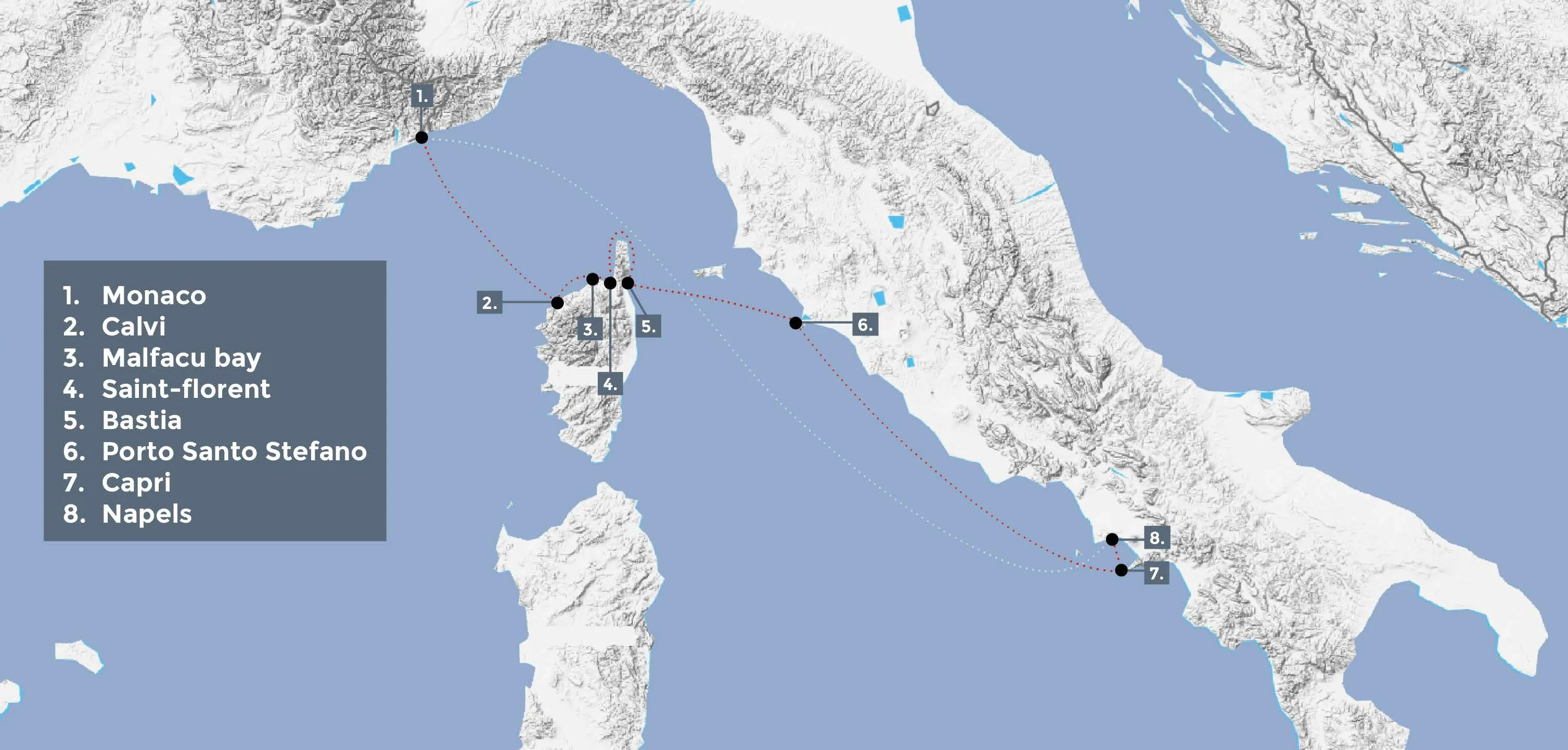
Based on these usage characteristics, this itinerary is sailed in the Mediterranean Sea, along the French and Italian coasts. It has a guest duration of one week, after which the captain sails to his main port in one day. The cities and anchorages visited are: Monaco, Calvi,Malfacu Bay, Saint-Florent, Bastia, Porto Santo Stefano, Capri andNaples. The intended use is implemented in the itinerary shownin Figure 10.1. Possible restrictions on access to ports during the itinerary are not considered. A brief description of the test itinerary is defined in Table 10.1, a detailed version is provided in the appendix, TableF.1.
Latest