innovation
Feadship Headway – Our very own vision on Innovation
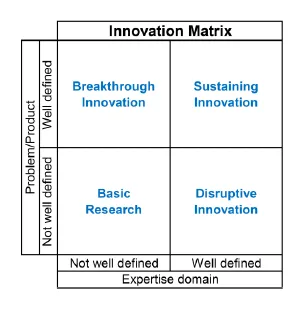
Innovation relates to both the evolution and revolution of our products, processes and technologies. Distinguishing various types of innovation leads to better understanding and gives perspective on the approach to take. As elaborated by Greg Satell based on the principles of Christensen, innovation can be broken down into four types. These types cover the process from understanding to application and from current to new products.
Basic research. The stepping stone of innovation. Strengthening of knowledge, understanding problems and possibilities, identifying and investigating new technologies.
Sustaining innovation. Improving existing solutions via awareness, problem identification, a problem-solving mentality, quantitative control, collaboration, communication and efficiency.
Breakthrough innovation. Novel solutions to important problems and needs via creativity, big ideas, a wide angle lens, open processes, ‘good failure’ and multi-domain involvement.
Disruptive innovation. Not a clear business model without a problem or clear purpose with a high probability of failure. Requires freedom, out-of-the-box mentality, brainstorming and broad expertise.
Basic research is required to generate the best innovative ideas and gain essential knowledge. Examples include validation of engineering or production technologies, analysing operational data to better understand problems and conducting investigations into the unknown. Feadship excels in sustaining innovation, as its industry-renowned quality proves. Breakthroughs have been regularly achieved by both visionary clients and Feadship initiatives. Both sustaining and breakthrough innovation will be targeted to substantially differentiate from others and improve the on board experience and product quality. Disruptive innovation requires diversion from the business model, which is not significantly present at Feadship at the time but may become attractive in the future. Acquisition, co-option, subcontracting or spin-offs should be considered at an early stage to effectively develop disruptive innovations.
Technology Readiness
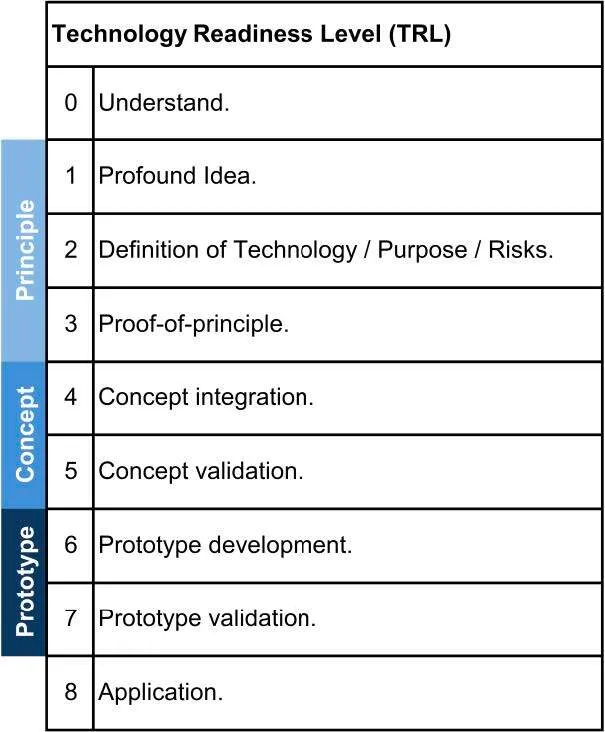
Change in technology, methodology and process requires definition, concept proving, detailing, validation, implementation and optimisation. Ranking this process enables consistent, uniform discussions about technical maturity and provides a model with which to manage work. It identifies essential steps to mitigate risks when considering application of a technology on a new yacht or its implementation within the organisation. Failure during development is an option but needs to be detected at an early stage and careful consideration will be needed before moving on to a next stage.
A well-known method of estimating the maturity of new technology during a development process is the use of Technology Readiness Levels (TRL3). Feadship uses a tailored TRL method to classify the maturity level of each innovation project under development at Feadship from the first idea to its real- life application. General definition of the levels are available here. Detailed definition including specific succession criteria is part of individual project plans and project progress reporting.
Knowledge Management
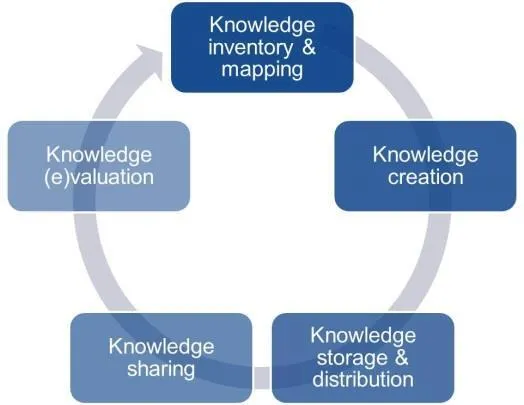
Getting the right knowledge to the right person at the right time is the core of knowledge management. This is an umbrella term for a variety of interlocking processes such as knowledge inventory and mapping, creation, storage and distribution, sharing and (e)valuation – the so-called knowledge value chain.
It is crucial that we continuously improve the knowledge value chain in order to increase efficiency and the quality of work. This enables people in the engineering, production and service operation to cope with increasing complexity and the richness and reach of the required knowledge. Knowledge management plays an essential role in the ideation process and the realisation and dissemination of innovation. It is embedded in the way the K&I department (inter)acts but may also be the subject of a dedicated project or programme.
Dedicated activities include:
- The De Voogt knowledge management programme (ongoing).
- Knowledge inventory and mapping of past and current developments for all Feadship partners.
- Guarantee and service feedback upstream (dedicated plan in development).
Development tracks
Six development tracks which target the areas that Feadship wishes to develop in the years to come are explained on the following pages. They are based on the previous innovation strategy and updated with the input gathered during the Future Labs innovation symposium and various workshops. In short, this summary reflects the ideas proposed by many Feadship employees.
No individual projects are listed in this strategic document. While the department initiates and proposes work to the different steering committees, ideas and development proposals can come from all Feadship employees. Work is selected after evaluating the added value of the tracks. Work per track will be balanced on the TRL scale to reflect its short and long term scope for development. Progress on the tracks will be monitored, evaluated and reported.
Tracks are listed in random order and numbered for reference sake.
- Use
- Comfort
- Sustainability
- Uniquity
- Regulation
- Feadship enterprise
Track 1 - Use
Owners attach great value to how ‘fit-for-use’ their yacht is and the on board systems. This has a considerable influence on how much they appreciate our product and indirectly affects feelings of comfort and quality. Although the wide variety of expectations among clients and their guests is challenging, we can categorise them into shared and individual expectations. This track encompasses design definition, solutions and yacht operation developments.
1.1 Specification
Understand and specify the use requirements, ranging from the sailing area and weather conditions to lower deck household routing in order to guide the design and outfitting.
1.2 Interaction
The performance of a yacht is as much determined by the way it is used as by the way it was designed and built. Interaction with the crew in terms of training, advice and feedback is required.
1.3 Autonomy
Sensors, remote monitoring, analytics and (artificial) intelligence provide new solutions that improve the performance of yachts and their systems and reduce crew tasks. The aim is to unburden the owner, improve the use and ultimately reduce the number of navigation and engineering crew. This will increase luxury space and allow owners and guests to enjoy the yacht in privacy and autonomy.
1.4 Services
In operating a yacht, the availability of the relevant services and infrastructure affect the ease-of-use greatly and are therefore an integral part of the owner experience. Feadship sees it as a necessity to develop our operational and refit services and guide or participate in the development of infrastructure.
Track 2 - Comfort
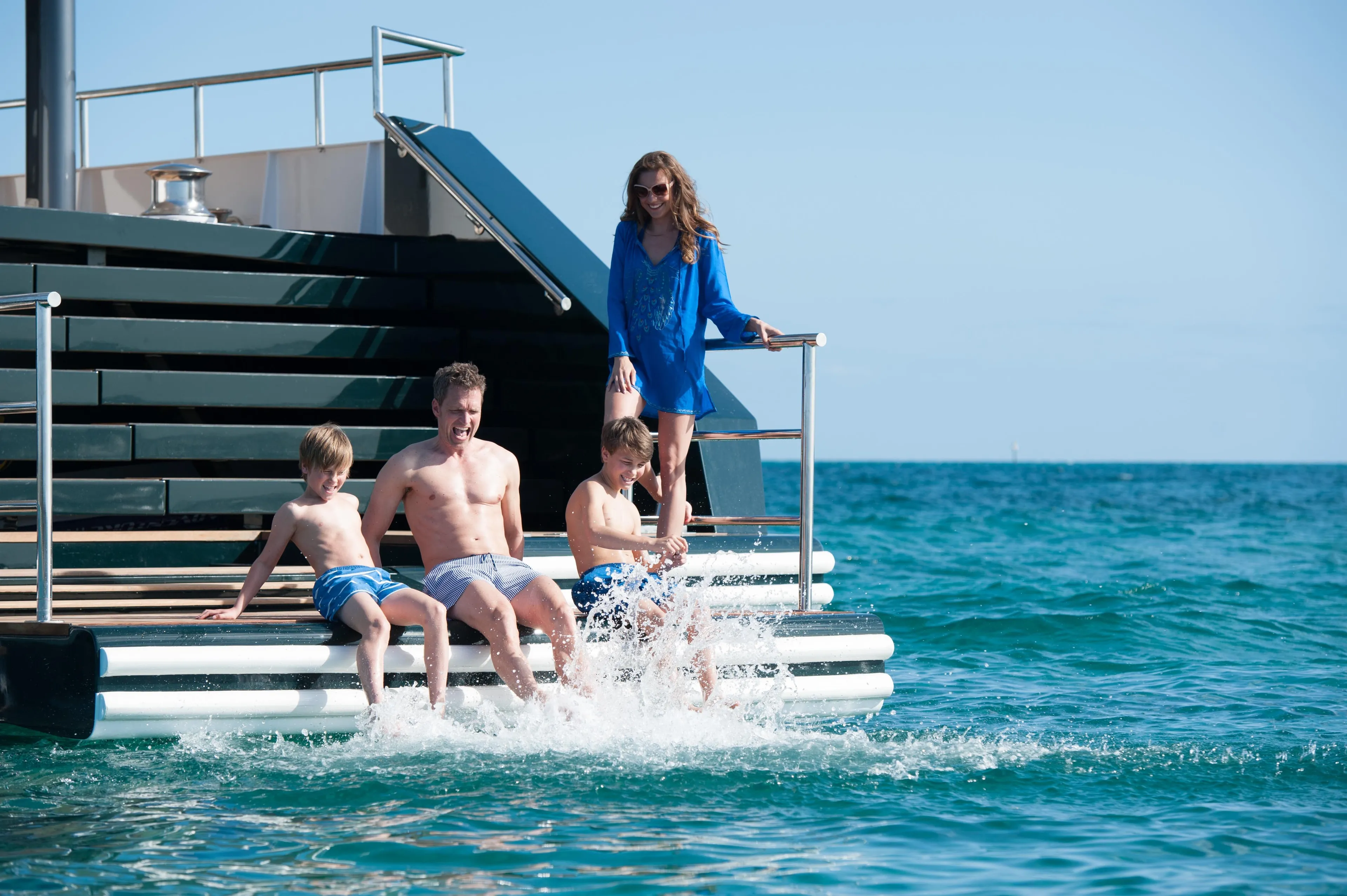
Comfort is achieved by eliminating the factors which cause discomfort. The ultimate target is no motions, vibration or noise and an optimum temperature, air quality, light and lines of sight. This track aims to understand, explain and define related matters and target all kinds of innovations, ranging from current engineering methods to new breakthroughs.
2.1 Rationalise
The difficulty with discomfort factors is to rate them and define the relevant threshold value at which something becomes a nuisance. These need to be consistent between projects and represent a Feadship quality standard. The performance needs to be explained in layman’s terms for specification and presentation purposes.
2.2 Climate
Temperature, air quality and air movement are vital for both the interior and exterior. Methods to improve the design (for instance by CFD) and innovations in HVAC and insulation systems are required.
2.3 Motions
Motions may exist as ship motions, flex of the structure, resonant vibrations or noise exerted by machinery or disseminated from the exterior through the structure. Various innovations are to be developed related to reduction of excitation and motion, response of the yacht and its structure, insulation and engineering methodology.
2.4 Space
The space people enjoy their time in has both a direct and indirect effect on the feeling of ultimate comfort. The way spaces are connected, lines of sight, colours and lighting need to be considered and a greater understanding gained of how they affect comfort is required in order to find solutions.
2.5 Operation
The way people experience comfort is very much affected by the way a yacht is operated. Crew training plays a role here and enhancing the intelligence of the navigation equipment/computer systems, DP and motion control is another area of development.

Track 3 - Sustainability
Sustainability is not a passing fashion. The targets posed by the IMO5 are 40% CO2 reduction by 2030 and 70% by 2050, taking the 2008 state-of-technology as the departure point. Feadship is yet to determine the capacity it will add to these targets within the context of its Corporate Social Responsibility strategy.
While there is a regulatory framework and methodology for ships in general, these do not address the specific situation of superyachts. This is why Feadship is exploring requirements, baselines and conditions. The basic principle of required and attained EEDI posed by the IMO may be adopted but needs to be tailored for leisure purposes. This track addresses various subjects, including rating methodology, design proportioning and system innovations.
3.1. Efficiency
Efficiencies can be improved by adequate proportioning, adaptive control, design optimisation and system innovations.
3.2. Energy carriers
Carbohydrates, electricity, hydrogen and ammonia are all examples of energy carriers. The viability of an energy carrier as a single or hybrid solution depends on engine technology, energy containment, density and infrastructure. Feadship will cooperate with the energy market and system suppliers, and seek out integrated solutions.
3.3. Emissions
CO2 targets give a clear destination. Emissions of noise in preservation areas are becoming a point of concern to (local) regulators. Emission of waste by yachts is another area to address.
3.4. Materials
While recycling of materials may not be relevant for Feadships as they will never be scrapped, regulations will demand traceability.
3.5. Harvesting
Yachts are exposed to various potential energy sources such as wind, waves and the sun. Systems that harvest this energy may improve energy management, system proportioning and use.
3.6. Regeneration
Feadship can contribute to the regeneration of waste or emissions both by taking measures on individual yachts and taking part in other initiatives.
Track 4 – Uniquity
The ‘Uniquity’ trademark encompasses variety, breakthrough solutions, the fast application of new technologies, personalisation, bespoke experiences and purpose-driven design. It should feed the purism which Feadship clients appreciate, enabling them to adapt to technology at an early stage and, preferably, be the first to deploy it.
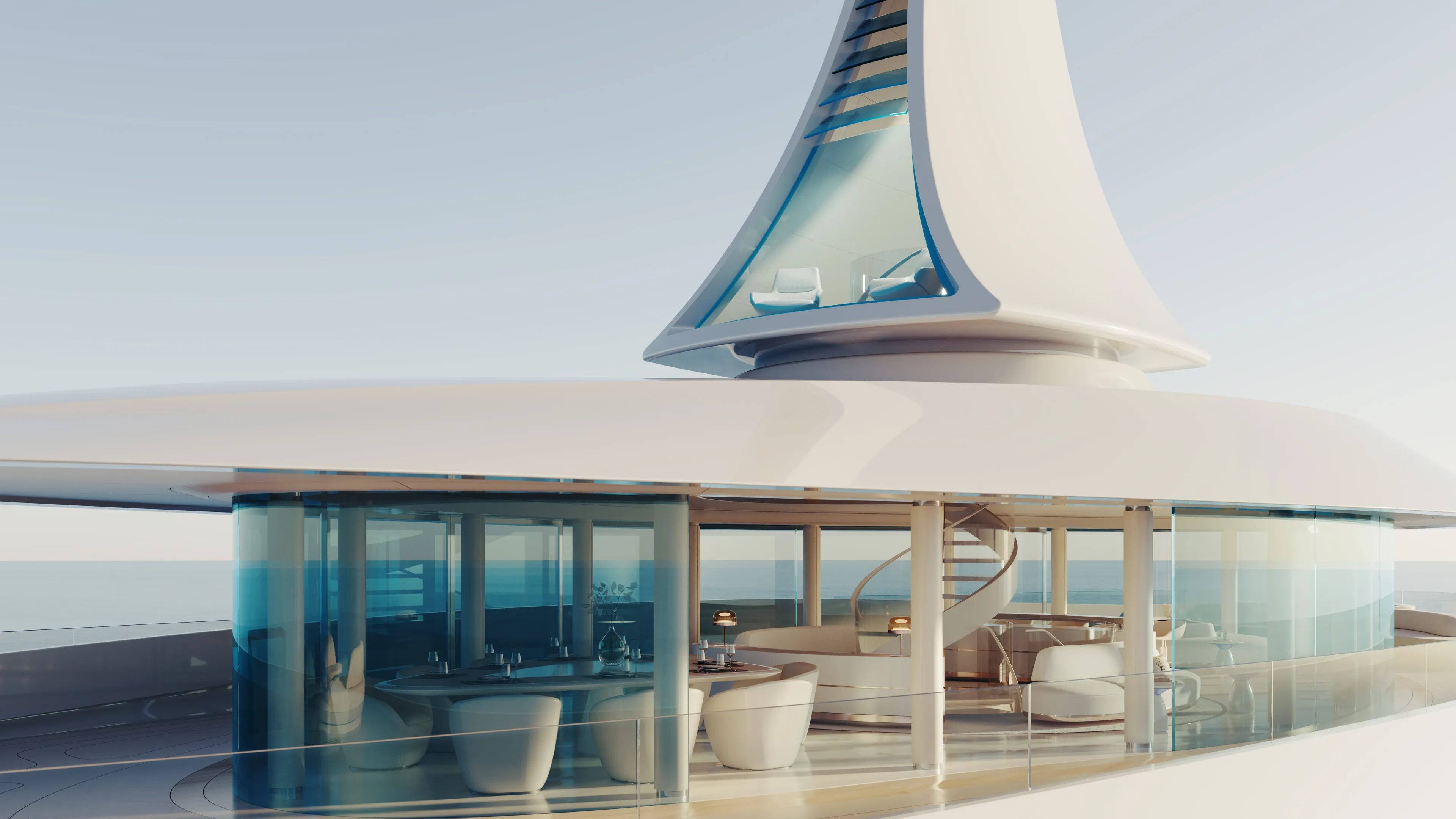
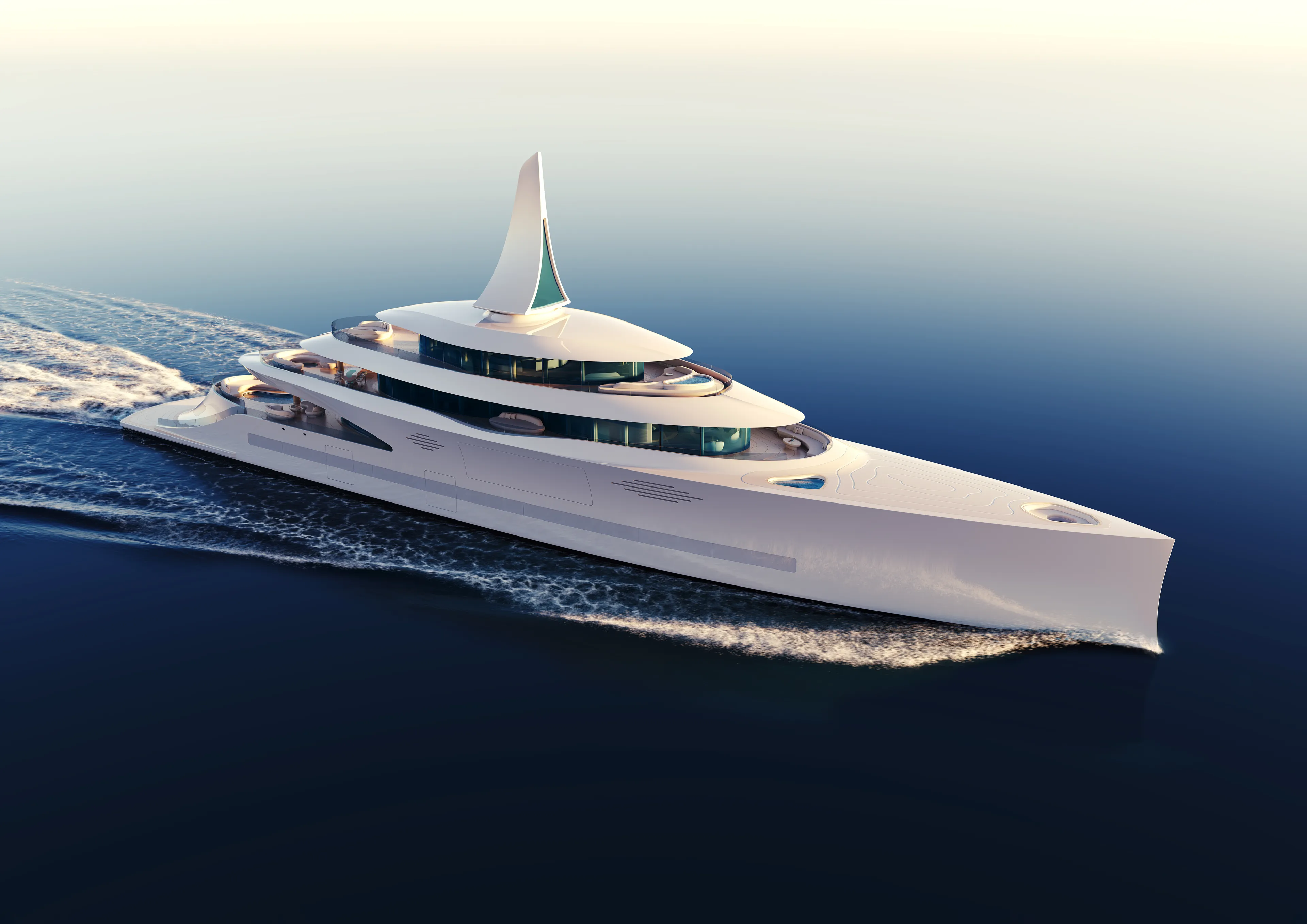
The work on this track will be focused on the lower TRL levels (1-4), providing numerous appealing solutions up to a ‘carte-blanche’ level. The K&I department will co-opt with Studio de Voogt and the sales managers to feed this creative process. The best ideas may be developed further when they have potential. The subjects are wide-ranging and involve both product and process innovations. Examples of ongoing developments are the increased use of glass structures and subsea concepts. Topics of future interest are (not limited to) smart materials, robotics, bionics and artificial intelligence.
Track 5 - Regulation
Changing regulations will force developments. By cooperation with the authorities we stay ahead, keep aware and remain in control. Related innovation work will be identified by the Feadship Rules Committee.
Developments within the International Maritime Organisation, Red Ensign Group, International Standardisation Organisation and classification societies will be monitored and participation sought. Joining the REG-YC and ISO industry working groups are examples of good participation. Our strategic partner is SYBAss.
Track 6 – Feadship enterprise
Innovations are required related to the Feadship enterprise to improve the customer experience, enhance quality and reduce cost and design restrictions. The operations considered are design, engineering, production and services, with some developments being a part of several different tracks. The main focus areas are as follows:
6.1 VR/AR
Technology that will assist us to quickly and accurately exchange information between engineering and production and vice versa. VR/AR also supports interaction and involvement with the client from the early sales period to all in-build stages. A post-delivery digital twin of the yacht assists servicing and crew during operations.
6.2 Feedback
Feadship’s service to the crew and clients after delivery provides considerable insight into the quality of the design and its systems. The challenge is to capitalise on this feedback to improve design definition and system specifications.
6.3 CAM
Production technology innovations that aid quality, cut costs and reduce design restrictions are required. This could involve robotics, machine learning and additive manufacturing. Work will be typically bound to the individual Feadship companies, although some collaborations will be pursued.
6.4 Simplicity
Design and engineering methods are becoming increasingly complex. Integration of 3D modelling and analytics are required to improve the unique designs and reduce costs. Subjects include 3D modelling and rendering, flow modelling, structural analysis, design exploration, topology optimisation and motion analysis.
6.5 Cooperation
These are developments that improve the interactions between designers, engineering, production and the customer. Concurrent design technology requires better fit-for-purpose tooling. Finding expertise at the right time reduces risk.
6.6 Assembly
The way we assemble our yachts has an impact on the production chain. It should support further customisation, the configure-to-order (CTO) production approach and scheduling flexibility, while also fitting the increasing scale of our projects. Alternative assembly methods are to be considered such as adhesion, interior modules and skidded engine room components.
Latest