design
The importance of motion comfort at sea
Owner and guest wellbeing are essential ingredients for a successful yacht and motioncomfort is a key factor herein as a recent survey shows.
Discomfort values in table 1 relate to ferries and cruise vessels. Yachts are generally smaller and the design criteria for noise, vibration, air quality and the like are generally much stricter. This means that seasickness and motion-related balance problems are even more important for overall comfort aboard yachts.
Reported cause (ferries & cruise vessels)
%
Seasickness
20%
Motion related balance problems
16%
Noise
10%
Vibrations
9%
Air quality
8%
Other / None
37%
This was confirmed by Steven Rattner during the Owner’s Summit of the GSF 2007. Rattner stated that ownership among families that can technically afford a megayacht is ridiculously low at 1% compared to anything else this group owns, and that motion discomfort is the main reason: “They don’t want themselves, their family or friends to feel uncomfortable on their big toy and they now believe that the size of these yachts and stabilization technology, especially at anchor, has addressed a major problem in motion sickness. If we continue to solve this we will see much higher penetration.”
Feadship has long been aware of the importance of motion comfort. Seakeeping tests are always commissioned in the case of prototype yachts and model test results validated by full-scale observations. In addition, Feadship participated in several motion R&D projects in the EU and implemented the results in new designs. This article examines some of these lessons.
What determines motion comfort?
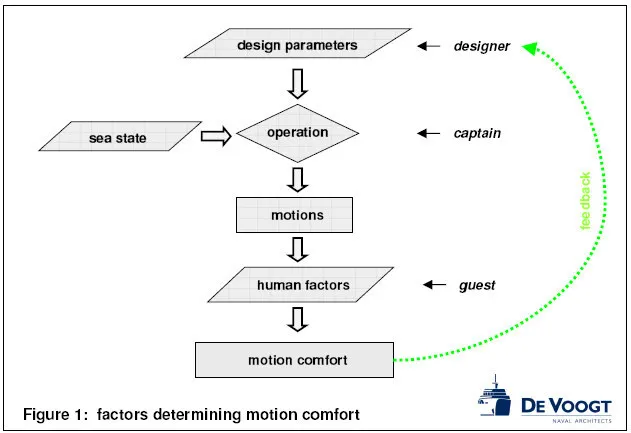
The behavior of a yacht is the combined effect of the wave environment, the design parameters and operational measures taken by the captain. The resulting comfort depends on the physiology and psychology of owner and guests (human factors). The relationship between the factors determining motion comfort is illustrated in figure 1. Feadship aims to close the loop by implementing feedback from the owner and crew in its new designs.
Design parameters
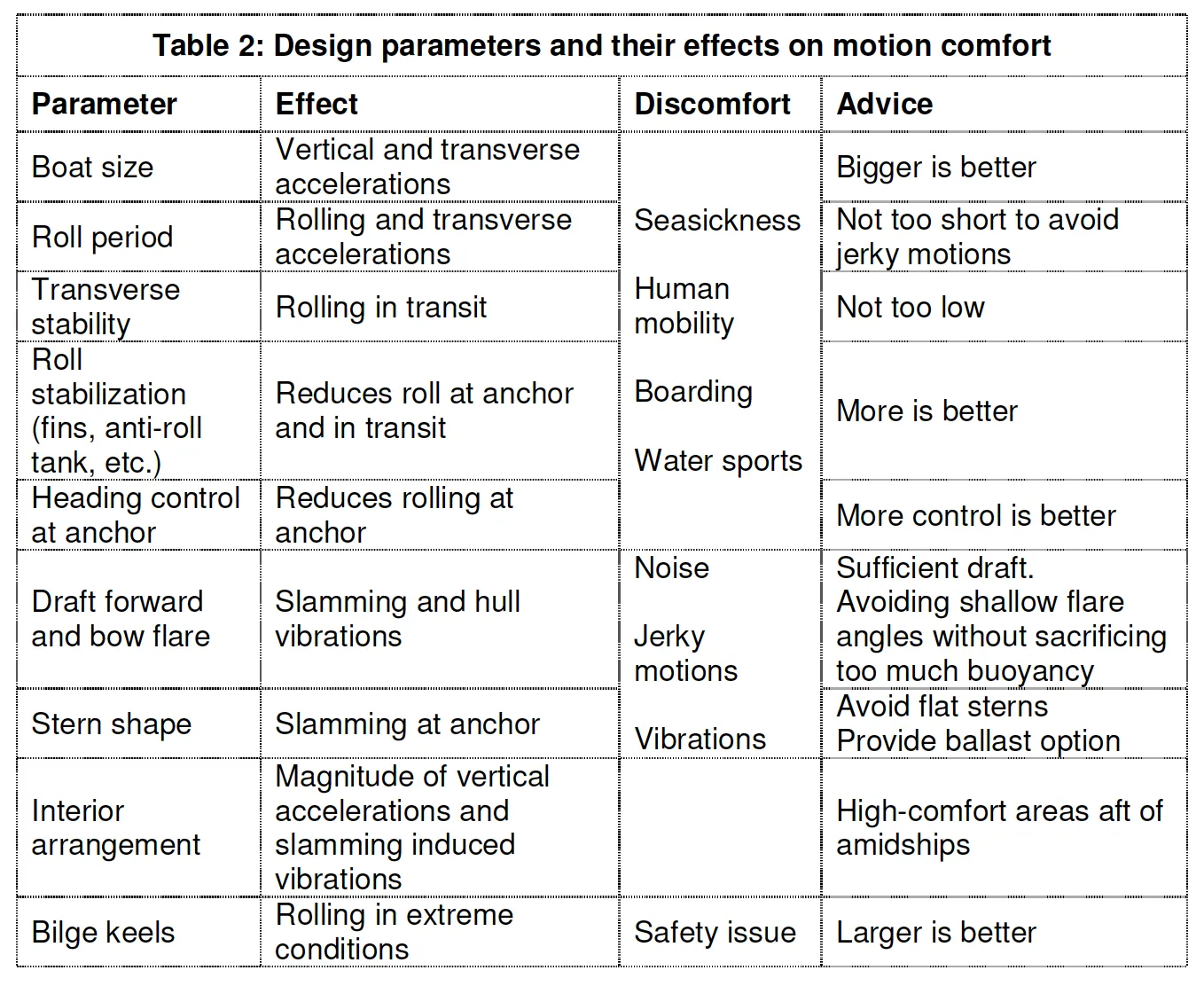
A yacht’s behavior in waves depends on several design parameters (see table 2) and Feadship gives high priority to solutions that offer the best achievable motion comfort.
As in all aspects of motoryacht design, Feadship sees feedback from owners, passengers and crew as crucial. Generalizing the lessons learnt and applying them in new designs is the way forward in high quality design. A precondition in achieving this goal is to close the loop between designers and users. We now have a rational criterion available to quantify motion effects. The next step will be to raise awareness of the key design parameters that govern comfort and the design tools that balance these with the other (often conflicting) design issues.
Read the full article enclosed.
Latest